

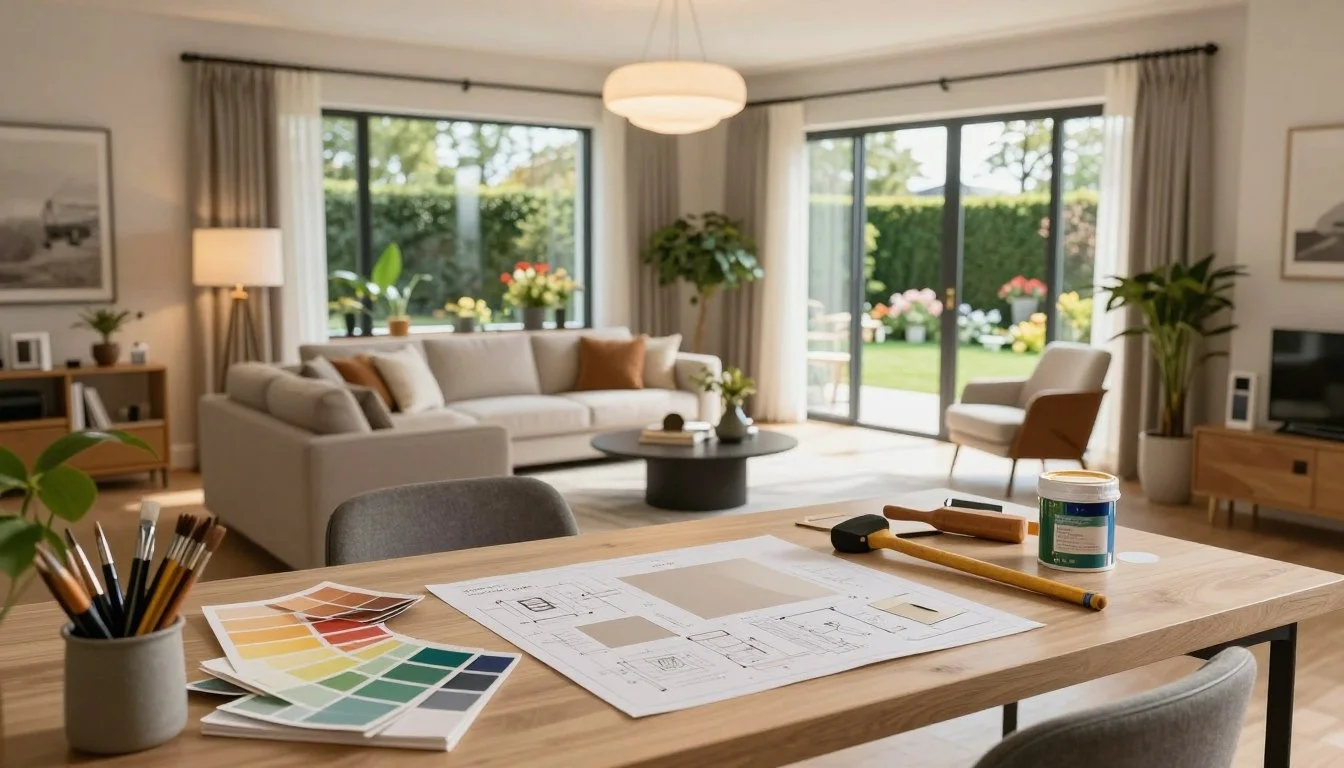
When it comes to home improvement, you should never feel as though you’re taking a risk with your money on the wrong investments. A lot of homeowners rush into renovations, are swayed by short-term trends, and end up spending more than they bargained for, only to regret the changes they made. That’s where home upgrading advice mintpalment can come in handy, enabling homeowners to make improvements with clear priorities, smarter budgeting, and long-term goals. Each upgrade comes with a focus on comfort, efficiency, and the value of the property in the future.
A successful home upgrade is about more than aesthetics. It demands consideration of structural requirements, energy performance, functionality, and lifestyle before aesthetics. From an architect’s perspective, renovating can be a smart move, even if you’re in a small apartment or a home for your full family, as this helps avoid unnecessary costly mistakes and ensures that your renovations will continue to pay off over time. This guide examines some of the many practical tips that can be taken for balancing budgeting, systems, design, and resale potential without getting overwhelmed.
The Actual Meaning of Home Upgrading Advice Mintpalment
Home upgrading guidance Mintpalment is essentially a disciplined approach and not a random ideology for renovation. The word “mint” is a testament to the freshness and contemporary thought, while “palment” signifies long-term placement and stability. The idea promotes homeowners to look beyond skin-deep upgrades and consider layered improvement.
There are four principles to a structured upgrade:
It’s most importantly concerned with structural security over cosmetic design. Second, it matches its spending with measurable returns. Thirdly, it sees energy efficiency as an investment, not a cost. Fourth, it plans for upgrades over time to minimize financial burden.
This strategy redefines renovation from an emotional process to a strategic management of assets.
He is a man of no Good Word and is Untrustworthy With Money
The number one error homeowners make is beginning from what they see rather than the foundation that supports the house. With beautiful floors, insulation failure is the biggest issue. Plumbing replacement reduces the value of new cabinets. This is prevented by a strategic hierarchy.
Typically, the sequence of upgrading is as follows:
The integrity of the structure is primary. This covers the stability of the foundation, the condition of the roof, and load-bearing components. These are not cosmetic changes; they are all protecting every future enhancement. Then, building systems come. You can see their impact on the efficient and safe operation of the house through electrical panels, plumbing lines, HVAC systems, and insulation. If they are dated, cosmetic work should be postponed.
Energy performance follows. Long-term operating cost reductions from windows, doors, and air sealing, as well as climate control improvements. These enhancements can be quantified in cost savings. Functional improvements occur after systems are secure. This encompasses kitchen flow, bathroom ventilation, space efficiency, and traffic flow changes.
Last but not least, the process is finished with aesthetic refinement. The visual experience is enhanced by the painting, the finishes on the floors, the lighting, and the décor. If the upgrades are structured this way, successive upgrades add on to previous upgrades.
Budget Allocation Strategy To Safeguard You
The main reason for renovations to fail is due to financial stress. Under home upgrading advice mintpalment, a smart framework spreads out investment mindfully instead of allocating all the money in one publicized place. A disciplined allocation could be energy, system, and structural stabilisation, and then decorative. This will stop you from being misled into over-spending on surfaces and ignoring the hidden costs.
Any budget should also have a contingency reserve. Of the total project cost, 10–20% of the money should not be moved without a real need. Older houses often have some unexpected problems like wiring, plumbing, or code changes. If there is no buffer, homeowners either stop projects midway or sacrifice quality to complete their projects within budget.
Structural Upgrades: The Hidden Value Builders
Structural work isn’t a sexy undertaking, but it can make a big difference in terms of property stability. A roof replacement, for instance, safeguards the ceiling and interior finishes, as well as the insulation. Ultimately, a leaky roof can escalate the repair expenses.
Sealing the cracks and stopping water from entering the house will help avoid red flags on the inspection and lessen the chances of cracking the foundation. These details are considered by buyers and appraisers. Insulation upgrades can save you lots of money each year on cooling and heating costs. This can amount to thousands of dollars in savings over several years.
If structural integrity is the priority in home upgrading advice mintpalment, then structural upgrades will leave room for cosmetic upgrades in the future, rather than undermining them.
Energy Efficiency is an Investment, NOT an Expense
Modern homeowners understand that energy efficiency measures not only provide a level of comfort, but also financial returns. Double glazing can help indoor temperature stability and save energy by replacing single-pane windows. Smart thermostats maximize energy efficiency automatically, eliminating wasted energy use.
LED lights reduce the amount of energy being consumed and have a long lifespan compared to conventional bulbs. Water-efficient fixtures save money and keep you comfortable. When suitable for location and usage, solar systems can cut reliance on grid energy and enhance resale appeal.
Home upgrading advice mintpalment with energy improvements will add up over time. Unobtrusively save money while making the world a better place!
Great Kitchen Improvements That Truly Pay Off
The kitchen is regarded as the primary part of the home, but a wide range of remodelling is not always needed. Often, strategic improvements are better than complete demolitions. Luxury finishes are less important than workflow optimization. Daily efficiency is determined by the relationship between the sink, stove, and the refrigerator. Better lighting promotes usability and atmosphere.
Upgrading to more energy-efficient appliances helps to make them perform better over time. Cabinet refinishing is less costly than replacement while bringing a new look to the cabinets. Kitchens that appear functional, light, and well-maintained are always more appreciated than kitchens that are chock-a-block full of trendy features.
Installing Improvements to Your Bathroom That Will Make Them More Comfortable in the Long Run
The bathrooms are enhanced with ventilation, control of moisture, and durable materials. The cost of repair and health benefits are both lost when mold is not considered. Installing water-conserving fixtures reduces water use. A bathroom can be modernized without any changes to the structure by simply regrouting the tiles and adding better drainage. In colder climates, heated floors can make things more comfortable; in more affluent regions, the feel of luxury made by heated floors can be more appreciated.
It’s reliability and cleanliness – not pretty.
Smart Technology That Simplifies Life
Technology should be used to solve problems and not to create them. Smart climate control systems adapt to personal habits and do it automatically. Security systems offer remote monitoring and can even offer insurance discounts. The implementation of automation should be introduced gradually. An overloaded home is a maintenance challenge! Rather, incorporate smart systems that directly enhance comfort, safety, or efficiency.
Technology is not performative; it is purposeful, according to home upgrading advice mintpalment.
Don’t Over Improve for Your Neighborhood
Matching improvements to local property standards is one of the most underutilized financial principles of upgrading. Extravagant upgrades in a small town are not likely to have a measurable impact when you sell your home. On the other hand, if the value is high, then under-improvement can lead to less competition. Study the sale trends of the area before undertaking major renovations. The improvement of property value should be compatible with surrounding market expectations. If a home is being upgraded strategically, this enhances its value without making the home too expensive to sell in its market.
Contractor Selection and Risk Management
Professional hiring is a job for the diligent. Always ask for detailed written estimates with line item breakdowns. Check licenses and insurance policies. Do not hire contractors that require big up-front payments without milestones. Where necessary, permits must be obtained. Inspections help to prevent potential issues for homeowners in the future when selling or facing legal troubles. The shortcut in the process of selecting professionals can lead to increased correction costs in the future.
Developing a Five-Year Upgrade Roadmap is a Process
A five-year roadmap spreads cost and lessens stress than trying to do everything at once. Year one could be for structural inspection and insulation. Year two could discuss HVAC efficiency. Year three may modernise kitchens or bathrooms. Year four enhances exterior curb appeal. In year 5, students develop aesthetic refinements. The staged approach enables recovery of capital between the phases and keeps the property trajectory upwards.
One of the Parts of The Upgrade Should be a Maintenance Program
You can’t upgrade without maintaining. Annual checks of roofing, plumbing, and HVAC systems avoid costly emergencies. The idea of preventive maintenance is to safeguard aesthetic enhancements as well as structural investments. A clean home is still a marketable home and is a stress reliever.
Conclusion
No one should ever undertake a home improvement reactively or impulsively. Optimistically, improvements enhance ease, saving money in the long run and even improving property values. Home upgrading advice mintpalment will provide you with a structured path that will give emphasis to structure, efficiency, functionality, and aesthetics in the right sequence. When you think of your house as a living space and a long-term investment, every improvement is a conscious one and not an emotional one. Strategic planning, budget management, and incremental implementation help to make improvements to daily living without compromising financial sustainability. Smartest homes are not the most costly. The most well-thought-out upgrades.